MARVEL Strike Force: Squad RPG
- 4.3
- Rating
- 50.00M
- Installs
- Free
- Price

 Analysis by App-foxy
I spent time with MARVEL Strike Force: Squad RPG as a role-playing game built around assembling teams from Marvel heroes and villains, and my overall impression is clear: it is at its best when I treat it as a long-term strategy hobby rather than a quick superhero brawler. The appeal is not simply seeing familiar characters on screen. The real hook is deciding which squad deserves resources, which abilities work together, and when to stop investing in a team that has reached its practical limit.
That makes it unusually satisfying for players who enjoy planning between battles. It also creates the main source of friction. Progress can feel slow when a favorite character needs materials, gear, or upgrades that compete with several other priorities. I would recommend it to someone who likes turn-based team building and can play patiently. I would be more cautious with anyone looking for a generous, purely casual Marvel game that can be completed without thinking about progression choices or optional spending.
Why the squad-building loop works so well
The strongest part of the game is the way individual characters matter less than the relationships inside a squad. A powerful hero is not automatically the right answer for every fight. I often found myself considering whether a character could protect a fragile ally, apply a useful effect at the right moment, or make the rest of the team more reliable. That shift from “Which character is strongest?” to “Which five work together here?” gives the battles their identity.
You May Also Like

 Pandora - Music & Podcasts
Pandora’s Music Is Easy to Start, but Harder to Recover
Pandora’s strength is its low-effort path from a seed to a station. Its weak spot is how much confidence it asks you to place in connection, setup, and quiet recovery.

 8 Ball Pool
 Is Built on Rivalries, Rematches, and Routine
A close look at the rivalries, rematches, shared routines, and unanswered safety questions that turn a quick pool match into a persistent mobile community.

 Samsung Music
’s Quiet Strength Is Playing What You Already Own
Its reach comes less from spectacle than from dependable access to a personal library. That simplicity is both the app’s strongest retention engine and its ceiling.

 AccuWeather: Weather Radar
AccuWeather Review: A Quick, Clear Forecast for Everyday Decisions
For everyday plans, the best forecast is the one you can understand quickly. AccuWeather makes rain timing, radar, and local conditions easy to act on, with a few trade-offs.

 Hill Climb Racing
Why Hill Climb Racing Still Turns Crashes Into One More Run
A tiny car, a bumpy hill and one more upgrade: Hill Climb Racing keeps resurfacing because its simple chaos makes every near-miss feel personal.

 AliExpress - Shopping App
AliExpress Makes Global Shopping Feel Personal, but Shoppers Bear the Risk
AliExpress turns a global marketplace into a pocket-sized discovery engine. Its reach is useful, its shopping loop compelling, and its trade-offs easy to miss.
More From Our News Desk
View All News


Combat is turn-based, so I can pause mentally before committing to an action. That sounds simple, but the decision-making becomes more interesting when several abilities have different purposes. Sometimes the obvious target is not the best target. Removing a support character early may be smarter than attacking the toughest opponent, while saving a defensive ability for the next turn can prevent a team collapse. I enjoy that the best move is often about timing rather than raw damage.
The Marvel setting helps because the roster encourages experimentation. Heroes and villains do not feel like interchangeable portraits when I am building a squad around their strengths. I can try a team that looks exciting because of its characters, then discover that its abilities do not complement one another as well as expected. That small disappointment is useful: the game teaches me to judge a roster by function, not only by recognition.
My most useful habit was keeping separate priorities for different types of content instead of trying to improve every character at once. I chose a dependable main group, then maintained a smaller secondary group for situations where the first team was a poor fit. This prevented my resources from being scattered across the entire collection. The important lesson is to build depth deliberately, not to upgrade everyone evenly.
That approach also makes the game more welcoming to players who enjoy collection systems. Unlocking a character is only the beginning. The interesting question is whether that character belongs in a team I already understand or whether the new arrival justifies rebuilding my plans. I like this because it gives new additions a purpose beyond filling a gallery, although it can also make the roster feel demanding when several promising options compete for the same limited attention.
Small decisions make ordinary battles matter
One of the better ways to enjoy the campaign is to treat each encounter as a test of preparation rather than a simple obstacle. Before starting, I look at the opposing lineup and think about the order in which threats should be handled. During the fight, I avoid spending every strong ability immediately. Holding one key action for a later turn can be more valuable than ending the current turn with slightly higher damage.
This is especially helpful in everyday play. If I have only a short break, I can complete a few battles and still feel that I made meaningful decisions. If I have more time, I can review my squads, compare upgrade paths, and consider whether a character is worth developing now or later. That flexibility is one reason the game works better for me as a regular routine than as a single long sitting.
A less obvious trade-off is that a visually impressive squad may be strategically awkward. I have had teams containing characters I personally wanted to use, only to find that their abilities overlapped or that the group lacked a dependable answer to a particular threat. Replacing one favorite with a less glamorous but more suitable member can improve the whole squad. For me, that is where the role-playing design becomes convincing: the game rewards composition and patience more than simply collecting recognizable names.
I also recommend resisting the temptation to judge a character after one disappointing battle. Some abilities become valuable only when paired with the right allies or used in a particular sequence. Before abandoning a character, I try changing the team order, adjusting the target priority, and testing whether another member is consuming the resources that character needs. This is a practical way to avoid wasting upgrades based on a first impression.
Progression is rewarding, but it asks for discipline
The long-term structure gives the game a strong sense of purpose. There is always another squad to improve, another character combination to test, or another weakness in my roster to address. That ongoing checklist suits players who like incremental progress. A small upgrade can make an older team feel useful again, and improving a neglected role can open more options than simply increasing the damage of an already strong attacker.
At the same time, the amount of possible improvement can become mentally tiring. I have to decide whether to spend materials on a character I use every day, prepare for a particular challenge, or save resources for a future plan. The game is more enjoyable when I accept that I cannot optimize everything at once. Trying to do so turns a strategic hobby into a constant accounting exercise.
The free entry point is important here. The game is free to download, which makes it easy to try the combat and see whether the collection loop suits me. Optional purchases range from $0.99 to $199.99 per item, so the spending scale is broad. I would advise setting a personal limit before becoming invested in a squad, especially if the satisfaction of faster progress is likely to tempt you.
I do not think spending is necessary to understand why the game is appealing, but players who want rapid roster growth may feel pressure to consider it. That is the central financial trade-off: patience can preserve the free experience, while spending may reduce some waiting and progression friction. Neither choice changes the fact that good team decisions still matter, but the pace of improvement can feel very different.
What the battles do better than simpler alternatives
Compared with a typical action-oriented superhero game, this one gives me more control over the planning layer and less emphasis on direct movement or reflexes. I am not choosing it for cinematic control of a single character. I am choosing it because I like managing a group, reading a battlefield, and making a sequence of decisions that gradually turns a collection into a functioning roster.
Compared with a simpler casual role-playing game, it has more room for specialization. A casual alternative may be easier to understand in the first few minutes, but this game gives me more reasons to revisit team construction. The cost is that the learning curve is less gentle. There are more upgrade decisions, more reasons to compare characters, and more opportunities to invest in the wrong place.
That distinction matters when deciding whether to install it. If I want a quick Marvel distraction with almost no planning, I would choose something more immediate. If I want a game that can occupy short daily sessions while also rewarding deeper thought, this is a stronger fit. Its identity comes from the space between collection and tactics, not from being the fastest or simplest superhero experience.
Where the experience becomes frustrating
The biggest weakness is not the combat itself; it is the pressure created by the size of the progression system. When a squad needs several kinds of improvement, I can feel pulled in too many directions. A character may be promising, yet developing that character can delay the upgrades that would make my main team more dependable. The result is a constant need to make compromises, which is engaging when I am in the mood for strategy but exhausting when I only want a relaxed session.
There is also a real emotional trap in collecting. A newly obtained character can feel important simply because it is new, even when my current roster has a more urgent weakness. I learned to ask whether the character solves a problem I actually have. If the answer is no, I leave that character aside until the rest of the roster is in better shape. This prevents excitement from turning into inefficient resource use.
The game may also disappoint players who expect every favorite Marvel character to remain equally useful throughout their entire experience. In a team-based system, usefulness depends on context, allies, and the demands of a particular battle. A character I enjoy may not be the best choice for my current objective. I appreciate that the design creates meaningful choices, but I understand why someone who wants to play only one beloved character could find it restrictive.
Another limitation is the need for patience. The strongest experience comes from accepting gradual improvement, learning from failed attempts, and returning to a difficult objective after strengthening the right part of the roster. Players who dislike waiting, repeated attempts, or long-term collection planning may see the same systems as chores rather than depth.
For that reason, I would not install it for a child who simply wants uncomplicated superhero action. The Teen content rating is a useful signal that it is aimed at an older audience, and the strategy layer requires more attention than a basic pick-up-and-play title. I would also skip it if my main goal were a self-contained story campaign with a clear ending and little ongoing maintenance.
Practical advice for starting without wasting progress
My first recommendation is to choose a core squad based on reliability rather than novelty. I would rather have a team with clear roles and dependable turn order than a lineup made entirely from characters I recognize most. Once that group can handle ordinary content consistently, I would expand into a second squad that covers a different weakness. This gives new characters a practical destination instead of leaving them as isolated collection pieces.
Second, I would keep a simple mental record of what each upgrade is meant to accomplish. “More damage” is not always the best goal. Improving survival, control, or the timing of a key ability may produce a larger benefit for the whole team. When I make an upgrade, I try to connect it to a specific problem: losing too early, failing to remove a dangerous opponent, or lacking a response to a particular effect.
Third, I would replay difficult encounters with a different opening sequence before immediately spending resources. Sometimes the issue is not that the squad is too weak but that I am targeting the wrong enemy or using an important ability too soon. This is one of the most useful ways to preserve materials. A change in decision-making can occasionally achieve what a costly upgrade would have done.
Finally, I would avoid building a roster around a single mode or short-term objective unless I am comfortable with the consequences. A narrowly specialized team can be excellent in one situation and disappointing everywhere else. I prefer a balanced foundation, then add specialized characters when I have enough resources to support them without weakening the squads I already use.
Who will enjoy it most
This is a good choice for Marvel fans who enjoy the management side of role-playing games as much as the characters themselves. It suits people who like comparing abilities, planning a sequence of actions, and watching a team improve over time. The free price makes experimentation easy, although the optional purchase range means I would approach the economy with a clear personal budget.
It is also a strong match for players who prefer short, repeatable sessions. I can fit a few battles into a commute break or a quiet moment at home, then return later to work on the roster. The game does not require every session to be a major event. Its progress loop works well when I want a small daily objective rather than a long uninterrupted adventure.
I would recommend looking elsewhere if I wanted a traditional console-style role-playing game, direct action controls, or a story that carries the entire experience. I would also be cautious if repetitive progression quickly loses its appeal. This game asks me to enjoy the process of improving teams, not merely the reward at the end of a campaign.
Its broad audience is reflected in its reach: the game has passed 50 million installs, while its average store score is 4.3 from roughly 725 thousand ratings. Those figures do not replace personal judgment, but they fit my experience of a polished, widely accessible game with a strong collection hook and a progression structure that will not suit everyone.
Device expectations and current place in the genre
The listed minimum requirement is Android 7.0, so the entry barrier is not especially demanding for players using a reasonably current device. I played it as a game that benefits from a stable routine: keeping the app available for brief sessions, checking squad priorities, and returning to battles with a plan. The current version is 9.6.3, which places the review in an actively maintained stage of its life rather than at launch.
Scopely has built the experience around the idea that a roster is something I continually refine. That is both its strongest design decision and its biggest commitment. I am never short of another improvement to consider, but I also need to decide when enough is enough for the day. The game respects my time best when I set a modest goal, such as improving one role or testing one squad arrangement, instead of trying to solve the entire roster at once.
The release date of March 28, 2018, also helps explain its established feel. This is not a brand-new experiment waiting to prove its identity. It is a mature mobile role-playing game with a substantial history behind its structure. For a new player, that can mean a lot to learn, but it also means the central loop is clearly defined: collect, develop, assemble, test, and adjust.
My final recommendation
After playing it, I see MARVEL Strike Force: Squad RPG as a thoughtful squad-management game wearing a superhero costume, rather than a straightforward action game with Marvel characters added on top. Its best moments come when I solve a battle through composition and timing, then carry that lesson into the next part of the roster. The satisfaction is gradual, but it feels earned.
The limitations are equally clear. Progression can become crowded, optional purchases may make faster advancement tempting, and players who want immediate action may find the planning layer too heavy. I would not recommend it to someone who dislikes repeated development decisions or wants every favorite character to remain the obvious best choice.
For me, the verdict is positive with an important condition: play patiently, protect your resources, and build teams around actual roles rather than collection excitement alone. If that sounds enjoyable, this free role-playing game offers a substantial Marvel-themed routine with enough tactical depth to keep me thinking beyond the first battle. It is worth trying for strategic collectors, but it is not the right Marvel game for players seeking effortless action.
FAQs for MARVEL Strike Force: Squad RPG
01What is MARVEL Strike Force: Squad RPG?
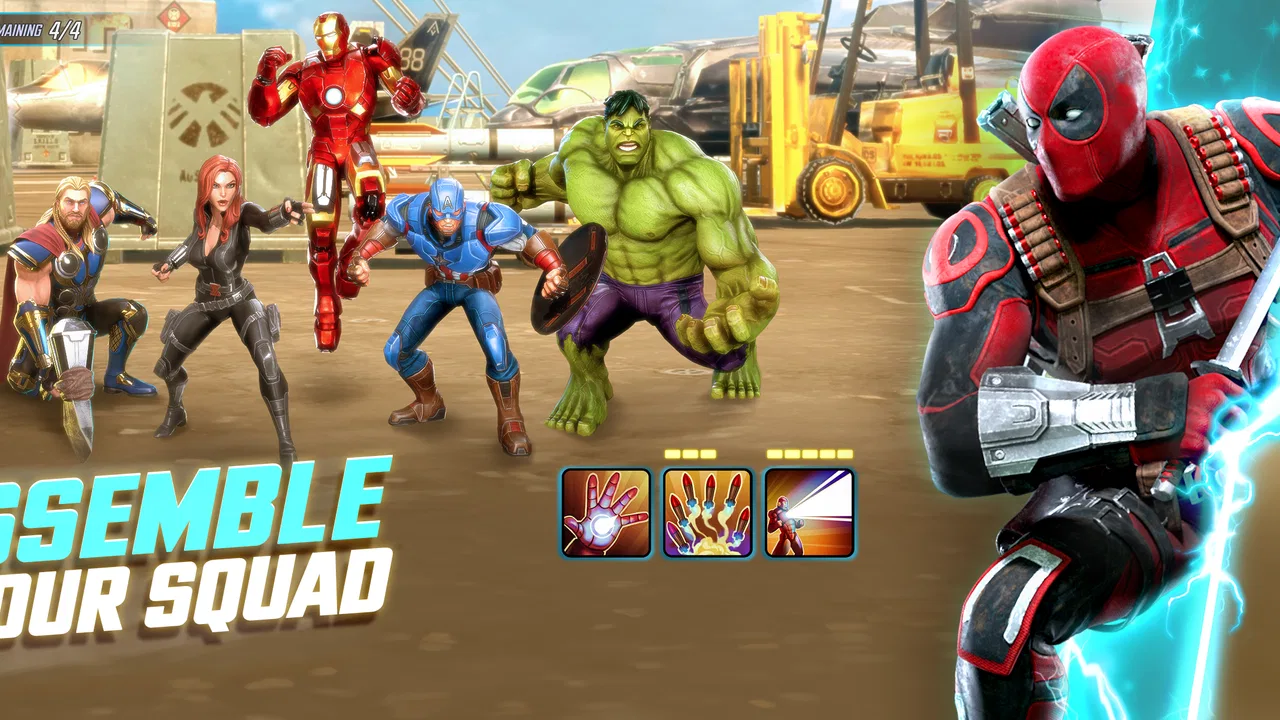
MARVEL Strike Force: Squad RPG is a strategic role-playing game where players assemble and upgrade a squad of iconic Marvel heroes and villains. Set in a visually stunning universe, the game involves turn-based battles against powerful foes, offering immersive gameplay for both casual and hardcore gamers.
02Is MARVEL Strike Force free to play?
Yes, MARVEL Strike Force is free to download and play. However, it offers in-app purchases for various items like character upgrades, gear, and other enhancements that can accelerate progress and improve gameplay experience. Players can choose to spend real money or earn rewards through regular gameplay.
03What are the minimum device requirements for MARVEL Strike Force?
To play MARVEL Strike Force, Android users need a device running version 4.4 or higher, while iOS users need iOS 10.0 or later. At least 1.5GB of RAM is recommended for optimal performance. Ensuring your device meets these specifications will help maintain smooth gameplay and responsiveness.
04How does team building work in MARVEL Strike Force?
In MARVEL Strike Force, team building is crucial. Players can create squads from a roster of Marvel characters, each with unique abilities and synergies. Balancing different roles—such as attackers, defenders, and support characters—is key. Strategic composition enhances your squad’s effectiveness in battles.
05Can I play MARVEL Strike Force offline?
No, MARVEL Strike Force requires an internet connection to play. The game features online elements such as real-time events, updates, and interactions with other players, making a stable internet connection necessary to fully enjoy and participate in the game’s features.
Pros
- Stunning graphics with detailed character designs.
- Engaging turn-based combat mechanics.
- Regular updates with new characters and events.
- Strategic team-building opportunities.
- Cross-platform play between Android and iOS.
Cons
- Requires internet connection to play.
- In-app purchases can be costly.
- Progression can feel slow without spending.
- Complexity may overwhelm new players.
- Some bugs reported in recent updates.

MARVEL Strike Force: Squad RPG
Gallery